Milan Design Week 2026: Your complete Guide to Salone del Mobile & Fuorisalone
From 20–26 April, Milan will once again turn into an open exhibition, with installations, events, and pop-up projects appearing across neighbourhoods, courtyards, and unexpected spaces. Many of these are temporary and only visible for a few days.
There are two main parts:
Salone del Mobile (Rho Fiera) = trade fair outside Milan.
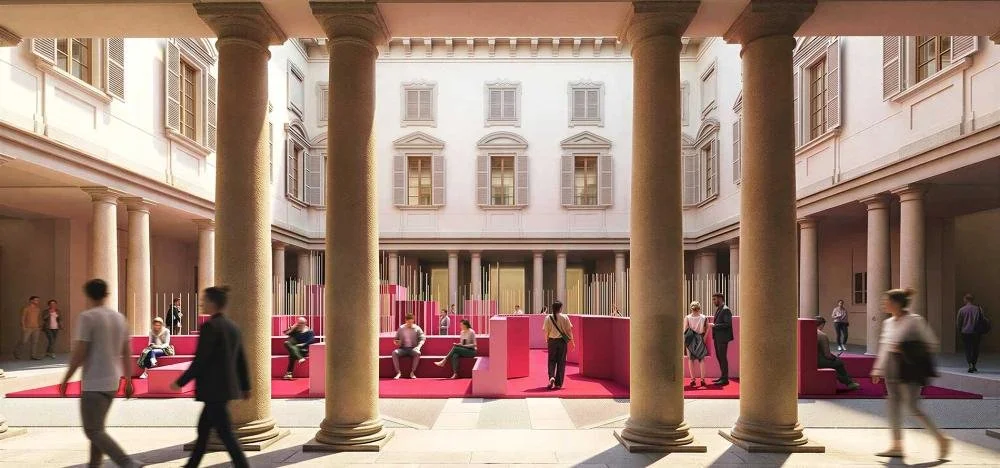
Fuorisalone = installations and events across different neighbourhoods.
Most people spend their time in Fuorisalone, which is free and doesn’t require tickets for most spaces.
Key Neighborhoods and Locations to Explore During Fuorisalone:
Brera is Milan's artistic heart, filled with galleries, historical landmarks, and quaint cafes. During Fuorisalone, the district becomes a hotspot for both traditional and cutting-edge design.
Tortona is known for hosting some of the largest and most impactful Fuorisalone events. It's home to both international brands and emerging designers, with large-scale installations and interactive exhibits.
Set between Brera Design District and Porta Garibaldi, offers a lively yet slightly more relaxed alternative during Fuorisalone. Known for its mix of elegant streets, local boutiques, cafés, and residential charm, Moscova strikes a balance between central energy and a more neighborhood feel.
Located in the historic center of Milan, just behind the Duomo di Milano, 5VIE District is one of the city’s most atmospheric neighborhoods. Made up of narrow streets, hidden courtyards, and centuries-old buildings, it offers a more intimate and refined alternative to larger design zones.
Isola has quickly become one of the trendiest neighborhoods in Milan. During Fuorisalone, it transforms into a design hub, with street installations, pop-up stores, and art exhibitions.
When to Go
Timing changes the experience quite a lot.
09:30–11:30 = easiest access, shorter queues
12:00–17:30 = busiest hours
after 18:30 = more relaxed, more social
Some installations also stop admitting people earlier than expected, so starting earlier gives more flexibility.
Planning Your Route
Before going, it helps to prepare a short list of places.
The official platform Fuorisalone.it allows you to:
browse events by area
save locations
build a simple route
Creating a small “passport” of saved places avoids spending time deciding on the spot.
Moving Through the City
You’ll walk more than expected.
Distances between installations are often short on the map but slower in reality due to crowds and queues.
A few practical points:
wear comfortable shoes
don’t rely on finding quick breaks
expect cafés and bars to be busy
Keeping the plan simple helps a lot.
Managing Queues
Queues form quickly and change throughout the day.
long queue = come back later or skip
shorter queue = enter immediately
Not every crowded installation is necessarily worth the wait.
Finding Less Obvious Spaces
Some of the most interesting installations are not visible from the street.
Look for:
open gates
inner courtyards
building entrances with minimal signage

Common Mistakes:
planning too many areas in one day
starting late
not saving locations in advance
waiting in every queue
underestimating distances
These are the main reasons the week feels overwhelming.
Example of a Simple Day (Brera)
Morning → main installations while access is easier
Midday → smaller spaces, short breaks
Afternoon → continue exploring within the same area
Keeping everything within walking distance saves time and energy.
Pro Tip:
Pick one area, start early, and plan a few stops in advance. Leave space to walk, explore, and adjust as you go.